Olella: A Romantic Script Handwritten Font for Elegant Digital Branding
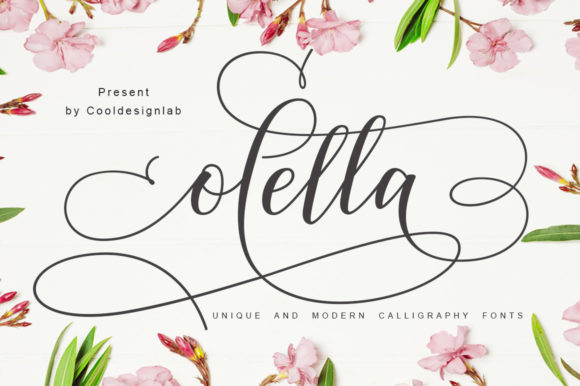
Two weeks ago, I was finalizing the hero section of a boutique coaching website — soft pastel background, minimalist layout, and a headline that needed to feel warm but intentional. I tried three serif fonts, two clean sans serifs, and even a subtle monospace. Nothing landed quite right until I dropped in Olella. Instantly, the headline softened, lifted, and gained quiet confidence — like a handwritten note from someone who knows exactly what they’re offering. That’s when I knew: Olella isn’t just another script font — it’s a tone-setter for digital spaces where warmth and elegance must coexist.
Olella for Wedding Invitations and Elegant Branding
While I wasn’t designing wedding stationery that day, the reason Olella worked so well on screen is the same reason it shines in print-based emotional contexts: its characters truly dance along the baseline. Not in a chaotic way — there’s rhythm, intention, and gentle variation in stroke weight and exit swashes. As a Script Handwritten typeface, it carries intimacy without sacrificing polish. On the coaching site, I used it only for the main headline (“You’re Ready to Begin”) and the subheading (“A 1:1 journey designed just for you”). Anything longer would’ve compromised readability — but that’s not its job. Olella excels at short, meaningful phrases where personality matters more than paragraph density.
Olella for Logo Design and Hero Section Typography
I tested Olella as logo text across multiple breakpoints. At desktop size (48px), its elegant touch came through clearly — especially the delicate entry strokes and balanced spacing between letters. On mobile (32px), I switched to a tighter tracking value and paired it with Inter as body copy. The contrast worked beautifully: Olella whispered “thoughtful,” while Inter quietly said “trustworthy.” This pairing is now my go-to for any client-facing Fonts setup where brand voice leans romantic, human-centered, or artisanal. Just remember: Olella is a display font, not a workhorse. It’s not meant for navigation menus, form labels, or pricing tables — save those for your reliable sans serif companion.
Olella for Course Sales Pages and Digital Brand Kits
Last month, I helped a course creator refresh her sales page. She’d been using a generic script font that felt dated and hard to scan. When we swapped in Olella, the transformation was immediate — not flashy, but *felt*. Headlines like “Your First Module Starts Tomorrow” and “Join 247 Students Who Transformed Their Practice” carried sincerity, not salesiness. Because Olella is both casual and elegant, it avoids the trap of looking overly ornate or childish — a common issue with many Script Handwritten fonts. For digital brand kits, I recommend exporting Olella as WOFF2 (for fast loading), confirming it includes standard OpenType features like ligatures and stylistic alternates, and always checking commercial licensing before embedding in client templates or SaaS dashboards.
Olella for Blog Headers and Social Media Graphics
I use Olella sparingly in blog headers — never for article titles longer than five words, but perfectly for series banners like “Letters to My Younger Self” or “Slow Work, Deep Results.” Its romantic energy pairs surprisingly well with muted photography and ample whitespace. For social graphics, I keep Olella to single-line quotes or campaign slogans overlaid on light-textured backgrounds. Avoid dark overlays unless you increase letter spacing and add subtle text shadow — the fine hairlines can disappear on low-contrast surfaces. And yes — test it on actual iOS and Android devices. Some handwritten fonts render inconsistently across browsers; Olella held up cleanly in Chrome, Safari, and Firefox, even with variable font-weight fallbacks enabled.
Olella for Portfolio Sites and Creative Landing Pages
A designer friend recently used Olella across her portfolio homepage — not just in the nameplate, but in project category tags (“Branding,” “Editorial,” “Digital Identity”) set small and tight. It added cohesion without shouting. That’s the quiet power of this Fonts choice: it doesn’t dominate; it deepens. If you’re building a creative portfolio, product landing page, or campaign microsite, Olella helps signal craftsmanship before a single word is read. Just ensure your webfont stack includes at least one system fallback (e.g., “cursive”) and confirm the license permits self-hosting — especially if you're bundling it into Figma design systems or Notion brand kits.
Olella for Online Shop Banners and Branded Web Content
For a small-batch ceramic shop’s homepage banner, I used Olella on the phrase “Handmade With Intention” over a neutral linen texture. It worked because the phrase was short, emotionally resonant, and visually anchored by generous padding and a subtle stroke outline for legibility. In online shops, Olella shines best in hero banners, limited-edition collection headers, and “About Us” intros — never in product titles or price tags. Its strength lies in evoking feeling, not facilitating scanning. As a Script Handwritten typeface, it asks users to pause — which is exactly what you want when inviting them into a story, not just a cart.
What to Check Before Using Olella in Your Next Project
- Confirm webfont formats include WOFF2 and EOT for broad compatibility
- Verify commercial license covers client work, SaaS platforms, and digital templates
- Test readability on mobile at 28–36px with at least 1.5 line-height in supporting copy
- Pair with a highly legible sans serif (like Inter, Poppins, or Manrope) for all body text
- Use OpenType features like discretionary ligatures only where they enhance — not obscure — meaning
Olella won’t fix weak copy or poor layout — but in the right context, it makes good design feel inevitable. It’s the kind of Fonts choice that whispers intentionality, then stays quietly unforgettable.