Zattoya: A Timeless Handwritten Font for Digital Design
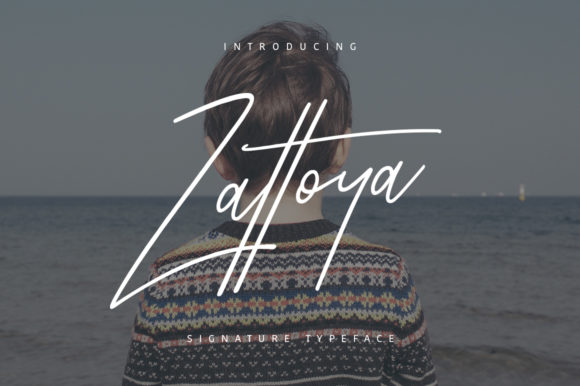
As a web designer who ships landing pages, SaaS dashboards, and boutique e-commerce experiences, I treat typography like interface logic — every font must earn its place in the layout. Zattoya is a Script Handwritten font that delivers both aesthetic warmth and functional clarity. It’s not just decorative; it’s a precision-crafted display font with natural stroke variation, balanced letter spacing, and subtle bounce — characteristics that translate beautifully to digital screens without sacrificing legibility at scale.
Zattoya for Instagram Captions and Social-First Branding
When your brand lives across Stories, Reels, and carousel posts, consistency matters — and Zattoya gives you a distinct yet professional voice. Unlike overused brush scripts, this Script Handwritten font avoids excessive flourishes that break on small viewports. Use Zattoya for quote overlays, limited-edition product announcements, or branded highlight covers. Pair it with a clean sans serif (like Inter or Manrope) for captions to preserve scannability. Because Zattoya is designed as a single-weight display Fonts family, it performs reliably when converted to SVG or embedded via CSS @font-face — no rendering hiccups on iOS or Android.
Zattoya for Landing Page Hero Headlines and Conversion-Focused Layouts
Your hero section has under three seconds to signal trust and tone. Zattoya works here because it balances personality with polish — it feels human but never sloppy. As a Script Handwritten font, it adds emotional resonance to value propositions (“You deserve calm.” “Start your creative business — today.”), especially for wellness coaches, indie makers, and creative educators. For maximum impact: use Zattoya only for the primary headline (36–64px on desktop, 28–42px on mobile), keep body copy in a highly legible sans serif, and ensure contrast meets WCAG AA (minimum 4.5:1 against background). Avoid using Zattoya for buttons or form labels — it’s a display Fonts asset, not interface typography.
Zattoya for Boutique Online Store Banners and Product Storytelling
E-commerce isn’t just about features — it’s about narrative. When you sell handmade ceramics, slow-fashion apparel, or artisanal stationery, Zattoya becomes part of your product’s origin story. Apply it to banner headlines (“Hand-thrown in Portland”, “Designed for quiet mornings”), collection headers, or limited-run campaign graphics. Because Zattoya is a Script Handwritten font with open counters and generous x-height, it remains readable even over textured backgrounds or soft-focus product photos. Just avoid stacking it on busy imagery — use a subtle semi-transparent overlay or solid color block behind the text to maintain hierarchy.
Zattoya for Creative Portfolio Websites and Designer Brand Identity
Your portfolio is your most important client-facing UI. Zattoya helps differentiate you instantly — not through trend-chasing, but through intentional, timeless expression. Use it sparingly: for your name in the header, project category tags (“Branding”, “Web Design”, “Editorial”), or short case study intros. As a Script Handwritten font, it pairs exceptionally well with geometric sans serifs (like Poppins or Space Grotesk) for body and navigation — creating rhythm without visual competition. Bonus: since Zattoya includes standard OpenType features (ligatures, stylistic alternates), you can fine-tune character flow in headings for extra polish.
Zattoya for Email Headers and Branded Digital Templates
Email clients are brutal on custom fonts — but Zattoya shines where it counts: as a web-safe fallback strategy. Embed it via @font-face for modern clients (Gmail, Apple Mail), then declare system-ui fallbacks for legacy support. Use Zattoya only in or blocks — never in paragraph or CTA text. This keeps your Fonts usage purposeful and accessible. As a Script Handwritten typeface, it elevates newsletter open rates by signaling authenticity before the first sentence is read. Think: “Your weekly dose of calm” or “New templates, live now” — short, warm, unmistakably yours.
Zattoya for DIY Brand Kits and Commercial Font Licensing
If you’re building digital brand kits for clients — or selling your own Notion templates, Canva layouts, or Figma UI libraries — licensing clarity is non-negotiable. Zattoya is a commercial Fonts asset, meaning you can embed it in client websites, SaaS dashboards, and downloadable design assets — provided your license covers web and digital distribution. Always verify multilingual support (Latin-based languages covered), file formats (WOFF2, OTF, TTF), and whether variable weights or stylistic sets are included. No need to over-engineer: Zattoya is intentionally singular in weight and style — making it predictable, fast-loading, and easy to govern across design systems.
Zattoya for Dark Mode Interfaces and Responsive Typography Systems
Contrast behavior changes dramatically in dark mode — and many script fonts vanish into low-luminance backgrounds. Zattoya, however, maintains presence thanks to its strong stroke contrast and deliberate spacing. Test it at 16px+ on #121212 or #1a1a1a backgrounds: it holds up. For responsive use, define Zattoya in clamp() values (e.g., font-size: clamp(1.75rem, 4vw, 2.5rem);) so scaling stays graceful from mobile to 4K. Never force it below 24px — this Script Handwritten font is optimized for impact, not microcopy. And always pair it with a neutral, high-contrast sans serif for supporting text to anchor the experience.
Final Implementation Tip: Less Is More With Zattoya
You don’t need five weights or ten alternates to make an impression. Zattoya succeeds because it’s focused: one expressive, timeless Script Handwritten voice — engineered for digital clarity, brand cohesion, and conversion-driven design. Whether you’re refreshing a Shopify theme, launching a course sales page, or designing a luxury skincare site, Zattoya earns its place when used with intention. Download it, test it in your next Figma prototype, and watch how a single Fonts choice lifts your entire visual hierarchy.